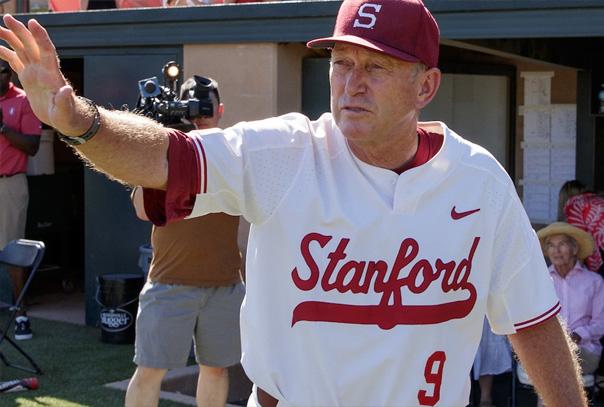
Baseball lost an icon in the passing of Mark Marquess this past January. Marquess led Stanford baseball from 1977-2017, and under his watch, the Cardinal won 1,627 games, captured three national titles, reached 14 College World Series, and ushered dozens of players to MLB, including Mike Mussina, Carlos Quentin, Jed Lowrie, Jack McDowell, Nico Hoerner and Tommy Edman. Here are some of our favorite quotes from his 2018 cover interview in Inside Pitch (Full article available here!):
“You’re only as good as your mentors and the people that help you along the way… When you get your opportunity, you have to be ready. You need good assistants, you need a mentor, you need help. There aren’t any good coaches who don’t have that support.”
“As an assistant, you must be loyal to the head coach, but you also can’t just be a yes-man. It can be hard to do, but you must be able to disagree amongst your coaching staff, because that will ultimately help the head coach and the program.”
“There’s an expectation that the kids you give scholarships to are going to be your better players, but you have to play, you have to produce. You just never know for sure with recruiting, and you’re going to get surprised. That walk-on is most always a great example when it comes to work ethic. As a result, they might become a better player than that scholarship guy, and that sends a message to the team.”
“When I recruited, I tried to sit by myself and just watch the game, that way I wouldn’t be tempted to talk to the people. I’d usually sit down the first base line just above the first base bag. I’m not antisocial, I was just there to concentrate on the two-to-three kids I’m there to watch. Now on the games where I didn’t have anybody? That’s when I would go bother the other coaches behind home plate!”
“When I first started, it wasn’t unusual to have a briefcase. Normally, I’d have one with everything in it—recruiting, admissions, everything I need to know. I was prepared for when I talked to recruits—if someone had a question about admissions or a scholarship, I’d have that answer on hand. I would also have a game briefcase, which had all the charts, clipboards, lineup cards in it. It was big enough to keep a dry shirt in too, for the days I threw BP. I could have switched bags, but I just figured what the heck, I’ll be the old guy with the briefcase!”
“One thing you can always demand from your players is effort. Effort also includes the coaches when it comes to time management and practice planning: you’re not working hard if you’re standing around at practice. We always tried to be as efficient as possible with our practice time, no one needs to be standing out there for three hours.”
“I’ve learned that players will do what you expect them to do. On the baseball field, in the classroom, wherever. It doesn’t mean they want to do it, but as long as the coach controls the playing time, they’ll do it. My players knew that my number one goal was for them to get their Stanford degrees, so if they weren’t taking care of business in the classroom, they didn’t play.”
“The only rules I had for our players were to be on time, work hard, and don’t do anything to embarrass yourself, your family, the university, or the baseball program. That last one really covers everything—if you’re drinking underage, if you’re stealing, that’s embarrassing stuff. And your older players have to reinforce that, they’ll tell the freshmen, ‘he’s not kidding—he’ll bench you if you don’t take care of business!’”
“Baseball is important and we live and die with it as coaches, but we’re very blessed to do what we’re able to do for a living. And they pay us!”