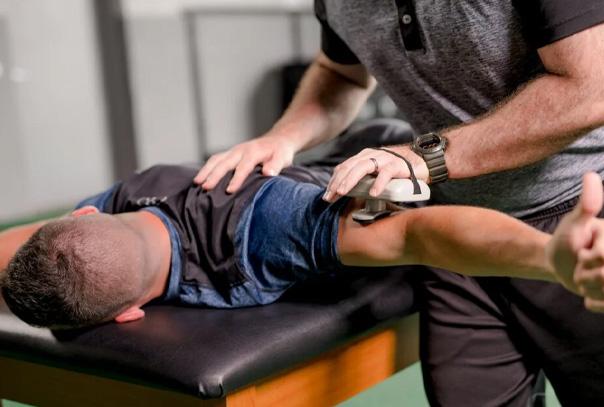
It’s the hollow, emotionless, trudging that can be seen by most injured ballplayers as they drag themselves around their team’s complex during their rehabs. Take an incredibly talented athlete, rob him of his ability to pitch, hit, run, just be on the field, change up his routines, and give him an extra 12-14 hours a day to do nothing in place of the BP, arm care, conditioning, team meetings, and simply being in the dugout or bullpen for three hours for a ballgame every night and you’ll start to see that “Zombie Walk” take over even the most optimistic of performers.
The pro baseball day typically starts in the early afternoon and goes late into the night. For the rehab ballplayer, it is flipped and truncated. Get up early, get to the complex by 8am, treatment, PT, whatever conditioning is possible, some kind of recovery, and then done by noon. The rest of the day is empty, like their hearts and their spirits.
“Will I ever play again? Will I return at full strength? How much will losing 12-18 months hurt my timeline to the big leagues? Will I return to compete with younger, stronger players? Without the game, I don’t feel like myself anymore. There’s a huge hole in my heart and my schedule where playing baseball used to be.”
All these thoughts, lack of sunlight, changes in physical activity, and loss of identity are on the faces of those zombies, and it impacts their confidence, their belief, and their body language.
When an athlete has a long-term injury, be it Tommy John surgery or ACL or something else, you need to have a mental skills rehab plan that goes along with your physical rehab plan. Here are a few ideas that can help your injured players keep their identities as baseball players, stay connected to the team, and keep their minds sharp.
Continuing Development
Besides not being able to play again, the biggest fear most baseball players have is that an injury will derail their development and the time lost won’t be able to be regained. You can boost a player’s energy and spirit by showing them how to continue their development even when they aren’t on the field. Game reps are incredibly important, but there is so much information that can be learned off the field that can help players on the field. An injured player can dive into analytics, baseball strategy, advanced scouting, and video analysis. Taking time to learn more about how pitchers attack hitters and what hitters are looking for at the plate can add another dimension to the game of a young player. Learning those skills while injured means they can add them to their routines and find data and study opposing hitters or pitchers with expertise and precision when they are healthy again. Injured players can also replace game reps by using mental practice.
Mental Practice
For the most part, your brain doesn’t know the difference between real and imagined images. So you can replace physical reps with mental ones. This is a good idea when you’re healthy, too. But if you’ve got a pitcher who had Tommy John surgery, you can keep that pitcher on weekly bullpens and outings against hitters by maintaining regular mental practice.
If you want to enhance this experience, make time for your injured player and talk through a bullpen session with him using the same time you would have if he were on the mound. Continuing development here can simply be getting good at mental practice, but it can also be a developmental task like seeing yourself throw changeups early in the count, seeing yourself as a left-handed hitter facing left-handed pitching so you recognize off-speed better and come back from your injury having improved plate discipline and not needing to platoon.
Game Day Prep Routine
Have your injured players come in on game days and execute their full routines before stretch and BP. Have pitchers watch video on the lineup you’ll be facing, read scouting reports, even sit in on a pitcher/catcher meeting to listen to how the actual starter is going to attack the lineup. Have hitters watch video on opposing pitchers, do some mental practice and take a few ABs, even do a mental early hitting session to simulate the habits they have built on game days. You might have a few extra bodies in your clubhouse or around your cage on those days, but the connection those players will feel to “being a baseball player” is important and well worth the crowding.
In-Game Learning
If you’re able to have injured players in your dugout during games, give them tasks so they see the game with a different awareness than they may have in the past. Ask them to look for pitchers tipping pitches or simply to notice how often hitters are seeing first pitch fastballs. Have them watch baserunners and pre-pitch setups on infielders, teach them how to have a coaching eye for details. Sometimes this opens up a whole new world for ballplayers who haven’t experienced the symphony of movement and actions taking place on every single pitch. Like each of these suggestions, the learning your injured players do will strengthen their habits and advance their routines and discipline when they are healthy again.
Ultimately, the best cure against The Zombie Walk is activity. Keep your injured players active, with their minds if they can’t be active with their bodies. The time that was spent on the field and in the cage must be replaced with productive activity or it will be replaced with fears and doubts and avoidant activities. When you do this right for your players, they are happier while injured, optimistic about their returns, and more resilient and better baseball players when they get back to full strength.
Geoff Miller has spent the better part of two decades working in Major League Baseball for multiple organizations. His mental skills training series and commentary are available through Optimize Mind Performance, an app that links athletes with some of the most renowned mental skills coaches from around the world. For more information, visit www.optimizemindperformance.com.